Tradition in the workshop’s work
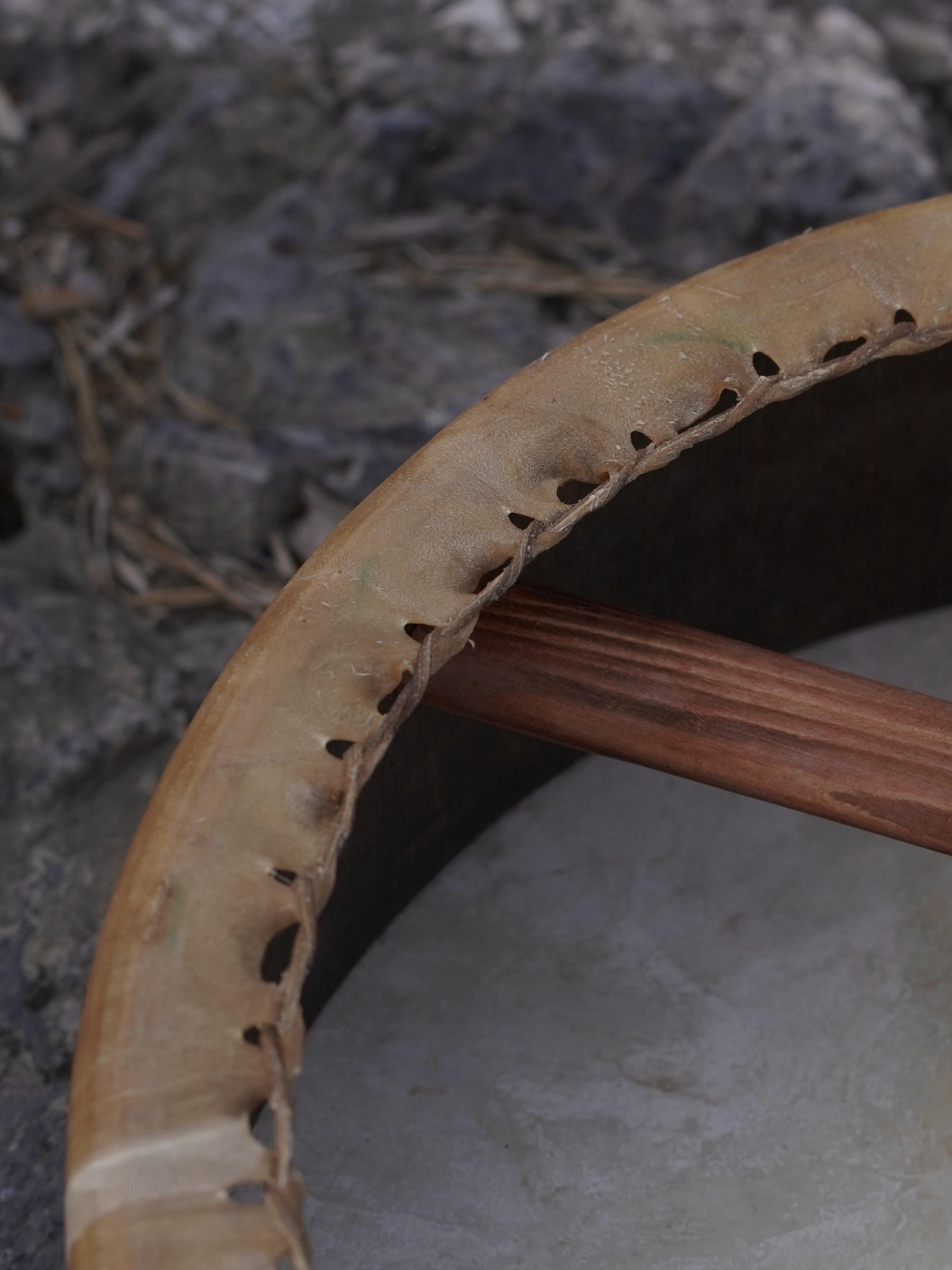
Our approach begins with the study of museum drums and literature on Altai shamanism. We consider materials, sizes and proportions, and the construction of the frame, membrane and handle. Actual ancient drums from excavations were among our points of reference.
We study historical construction together with makers and historians, and compare it with the practice of making. Wood selection and work on proportions and hide preparation shape today’s instrument. In this way, tradition continues in the work of the present-day workshop.
Shamanic traditions concern the making of the drum. For us, its construction, handcraft and the separation of making from personal decoration are important. We hand over the drum with an unpainted membrane; its further appearance and use are determined by its owner.
Explore the ALTAU drum’s construction →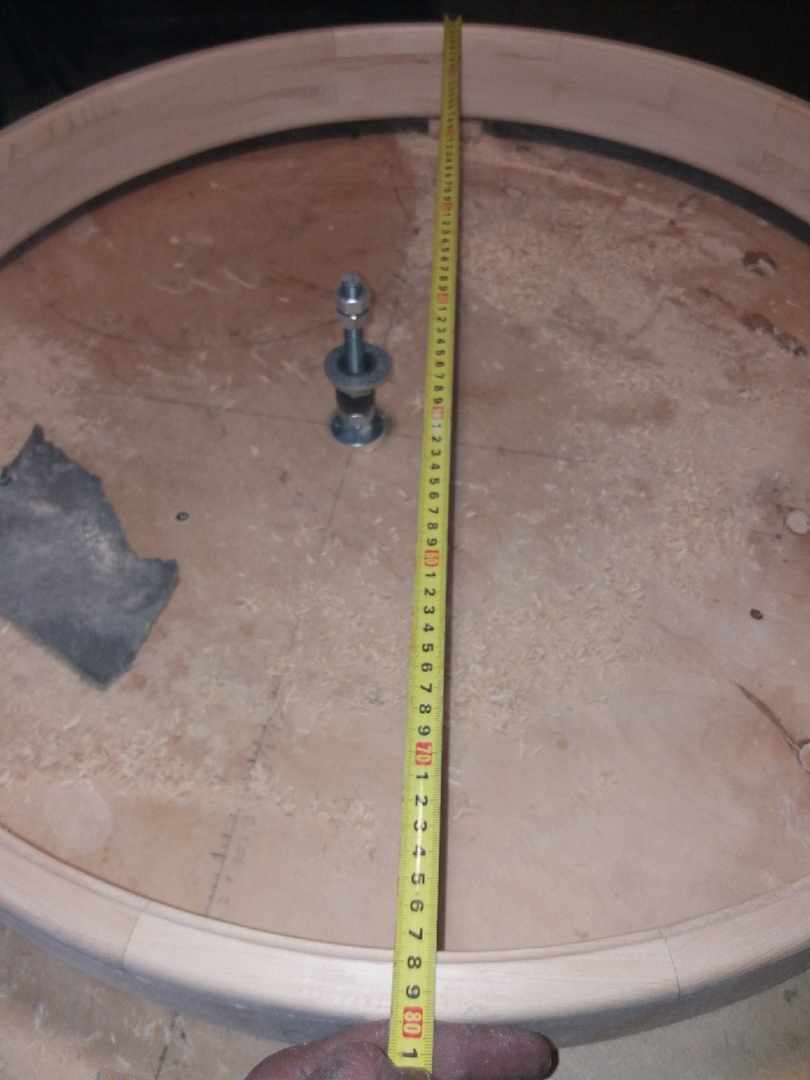
The workshop’s crafts
Frame making is a separate specialisation. The frame maker works with cedar pieces, their joints and a precise circular shape. A circle helps distribute the load of the stretched hide evenly, so particular attention is given to the frame’s shape and assembly.
Preparing the membrane requires different skills. Maral hide is prepared by hand as rawhide and stretched over the frame. The handle, fastenings and beaters are also part of the work on the instrument. The leather case is made by a leather workshop.
Dividing the work allows each maker to concentrate on one operation and its details. The work is connected by shared requirements for the whole drum. Each part is made with its place in the instrument and the next maker’s work in mind.
Checks at every stage
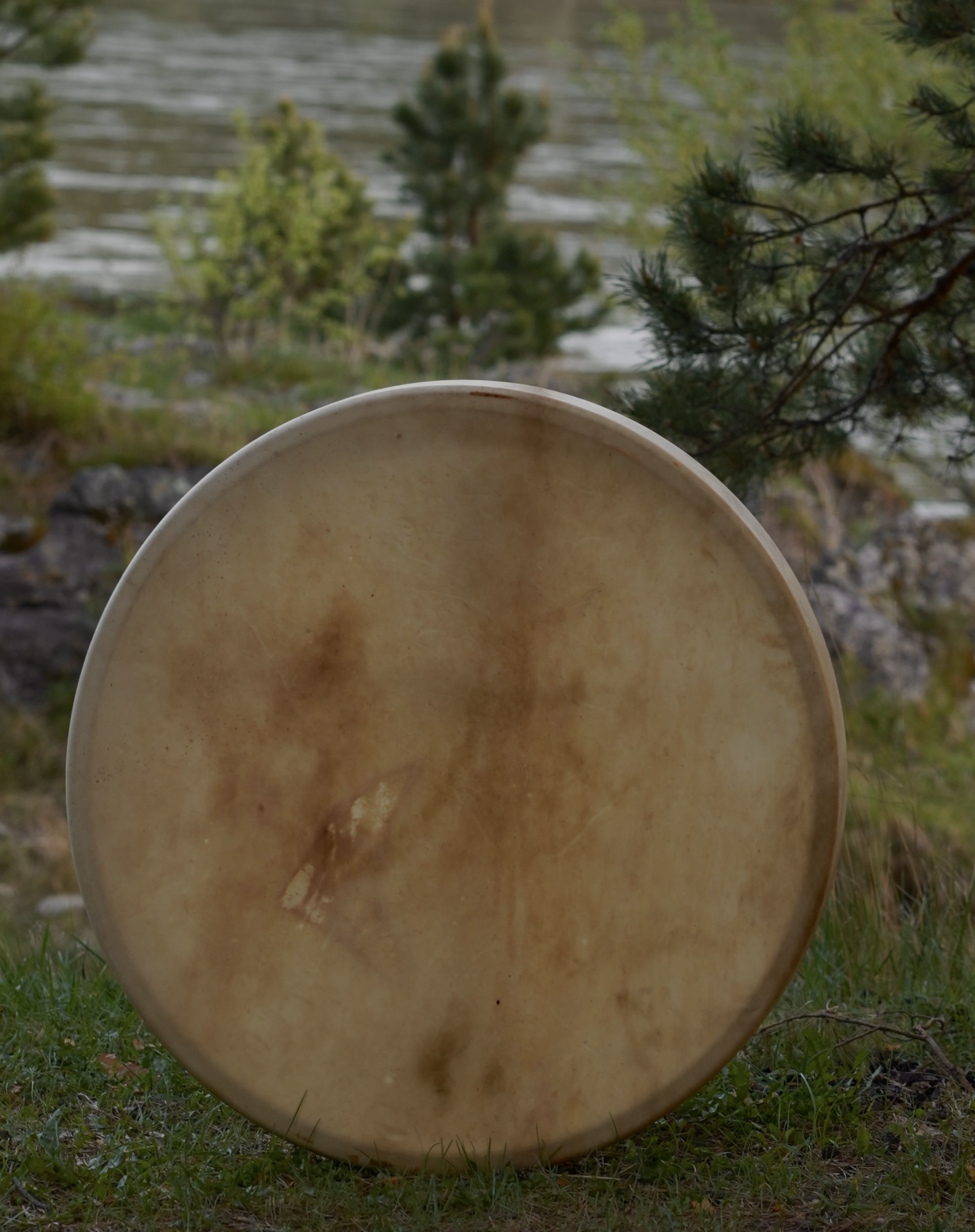
Each next maker receives and inspects the previous work. The frame is checked before the hide is stretched; after drying, sound and membrane tension are checked as the set is assembled. Observations are discussed among those involved and taken into account in making.
The assembled drum is inspected as a whole. Work on the individual parts is completed by checking the instrument its owner will use.
The workshop’s annual cycle
In autumn and winter, we gather cedar wood and hides. The makers use these materials throughout the year to create frames, prepare membranes and assemble drums. The workshop keeps a stock of ready-made frames in different sizes.
After stretching, the drums are hung to dry. The instrument is then given time to rest. During this period, it is observed and its membrane cared for and treated with cedar resin. Drying, resting and care are part of the work on the finished drum.
After transport, the drum is also given time in its new surroundings. The workshop carries out a final inspection before packing and dispatch.
The 60 cm drum can be purchased ready-made or commissioned throughout the year. Production in a craft workshop is limited; availability and the making timeframe are agreed personally.
- 01Gathering materials in autumn and winter
- 02Making and inspecting the frames
- 03Preparing and stretching the membraneIn parallel: beaters
- 04Drying
- 05Inspection, resting, observation and care
- 06Transport and time in new surroundings
- 07Final inspection before packing and dispatch
The lives of the drums
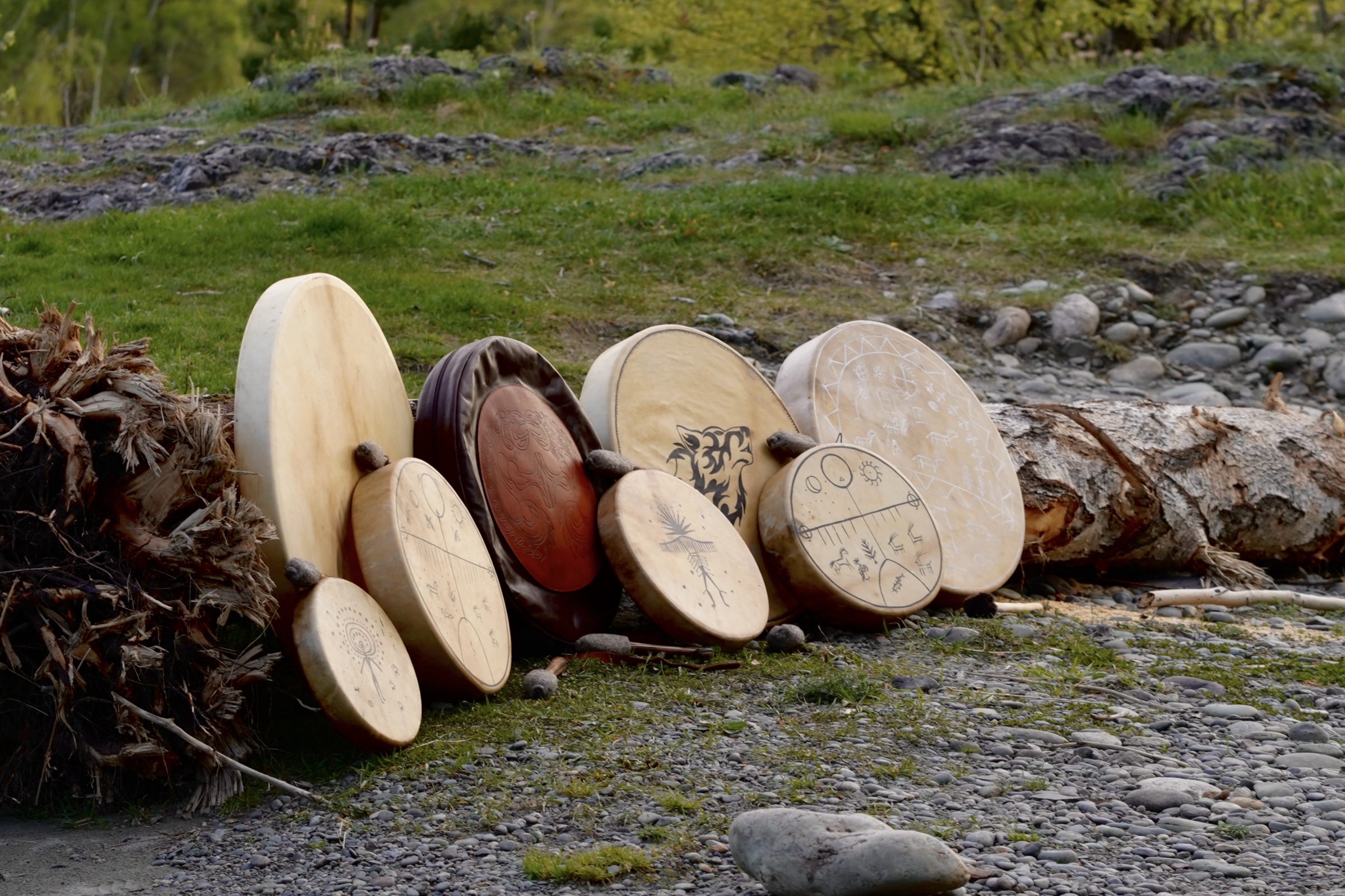
We have worked with Altai drums since 2009. The experience of selecting instruments by different makers, ordering to our requirements and making our own has shaped ALTAU’s approach today.
The experience continues after dispatch. Drums live in flats with heating, travel and change countries and climates. Owners share their sound, ask about care and come to us for repairs. This helps us better understand how the frame and membrane behave over time.
Experience of use returns to the workshop’s work: to requirements for frame strength, hide preparation, resting and checks. We continue the traditional construction, taking into account the instrument’s life today.
The workshop’s responsibility
The technology, requirements for the drum and accumulated knowledge remain with ALTAU. They provide a shared foundation for the makers’ work and future instruments. The workshop is responsible for the finished drum and complete set.
We keep photographs of our work and records of dispatches. Owners’ accounts add to the drums’ stories and our experience of their use. We stay in touch about care and the instrument’s condition.
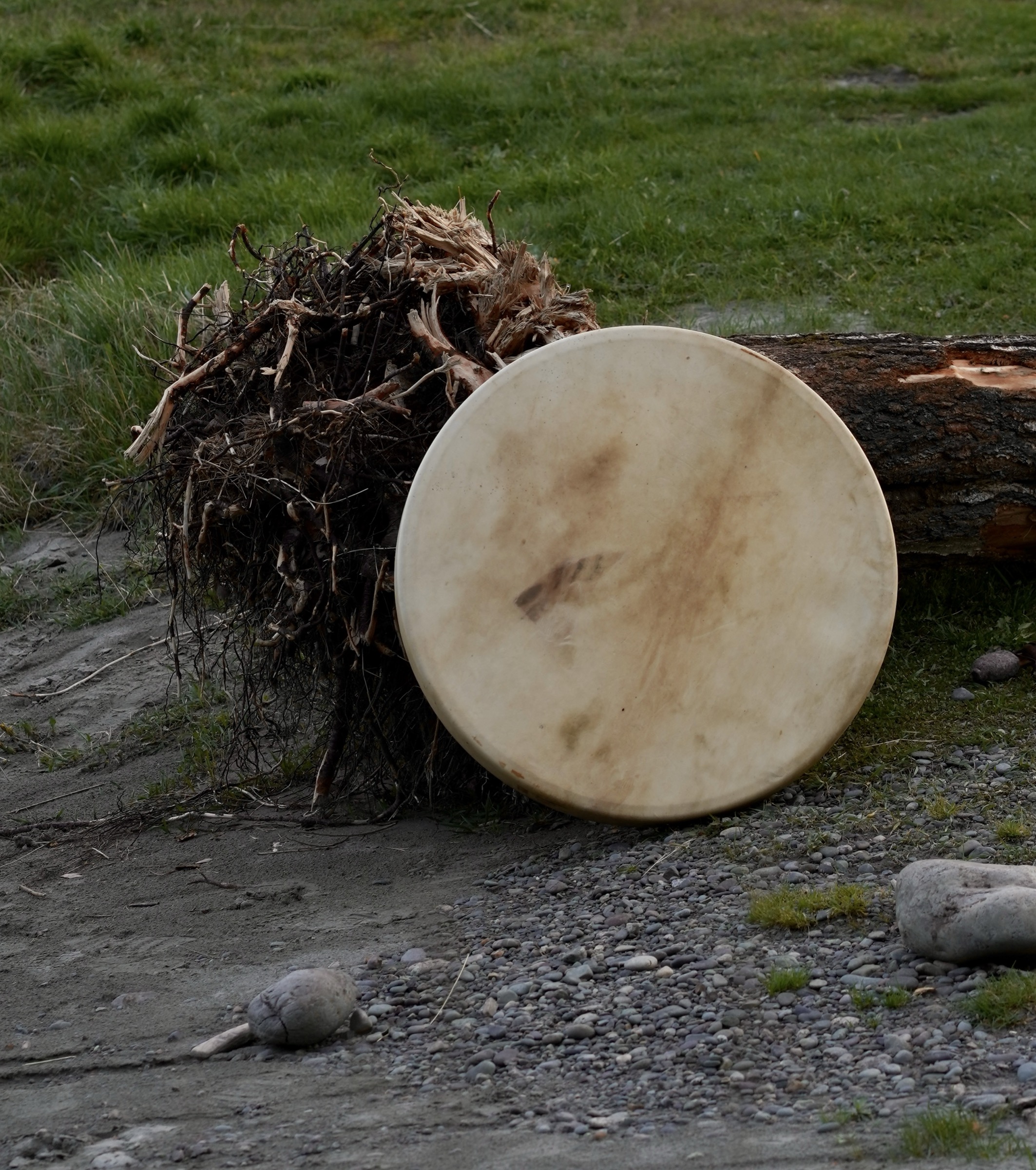
New drums from the workshop
Leave your email — we will let you know when drums become available, including rare large sizes.