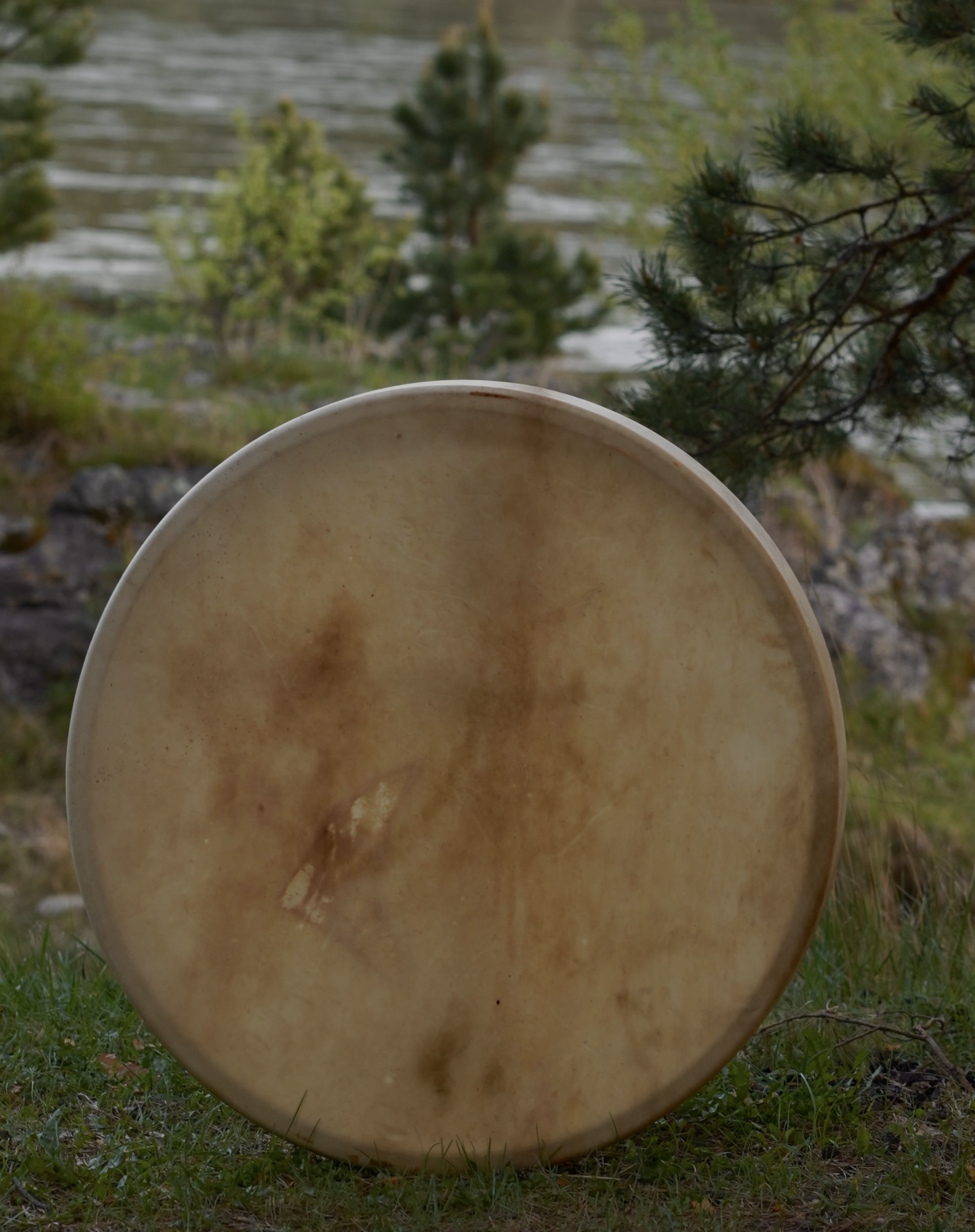
ALTAU drum
According to Altai shamanic traditions
In the Altai, we create drums with a cedar frame, a maral-hide membrane and a low, deep sound. Handcraft, the natural texture of the materials and a tangible vibration define the instrument’s character.
At its heart is the Altai tradition of drum making. We continue it, bringing together the study of historical instruments, the craft of our makers and the experience of how our drums live with their owners in the modern world. Size, frame construction, hide preparation and an unpainted membrane are all part of this approach.
The Altai tradition
Shamanic traditions determine how the drum is made: its materials, the construction of its wooden frame and the preparation of the membrane. In this tradition, making the instrument and giving it a personal appearance were separate parts of the work. The maker created the drum; the shaman gave it its own appearance.
In studying museum drums and accounts of the Altai tradition, we pay attention to proportions, wood, the membrane and the handle. This knowledge continues in the workshop’s work today — in our choice of materials, construction and method of making.
Today, the ALTAU drum is open to anyone: a musician, someone working with sound, or someone using it for meditation or personal practice. You choose the place it will have in your life.

60 centimetres
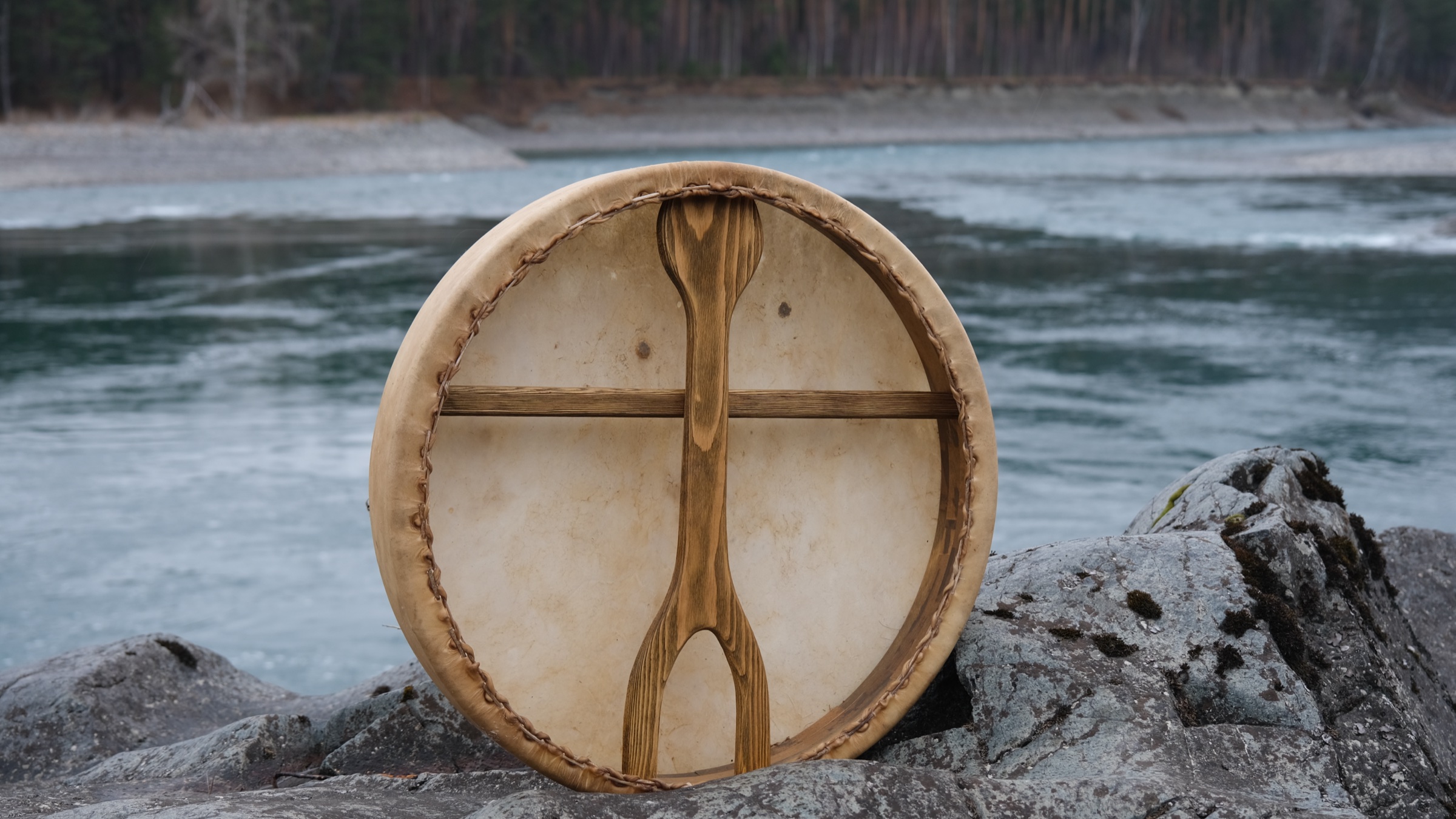
Our principal drum is 60 centimetres in diameter. We chose this size through the study of traditional instruments and our own practice: a deep sound is combined with a weight that is comfortable to work with.
Size is connected with the way a drum sounds and feels in your hands. In our principal instrument, we retain the chosen proportions, working consistently on every part of its construction.
Sound
A low, deep sound with a tangible vibration. It can give you goosebumps and bring a sense of calm. The beater and the way you play reveal different aspects of its sound.
Work on the drum’s voice begins with the wooden frame — its foundation in many ways. The wood, depth and construction of the frame contribute to the sound alongside the membrane and its tension. This is why we give particular attention to making the frame, as well as preparing the hide and assembling the instrument.
The natural membrane, prepared as rawhide, responds to humidity and temperature. As its tension changes, so does the instrument’s voice. This property of the material accompanies the drum in playing and everyday care.
Cedar frame
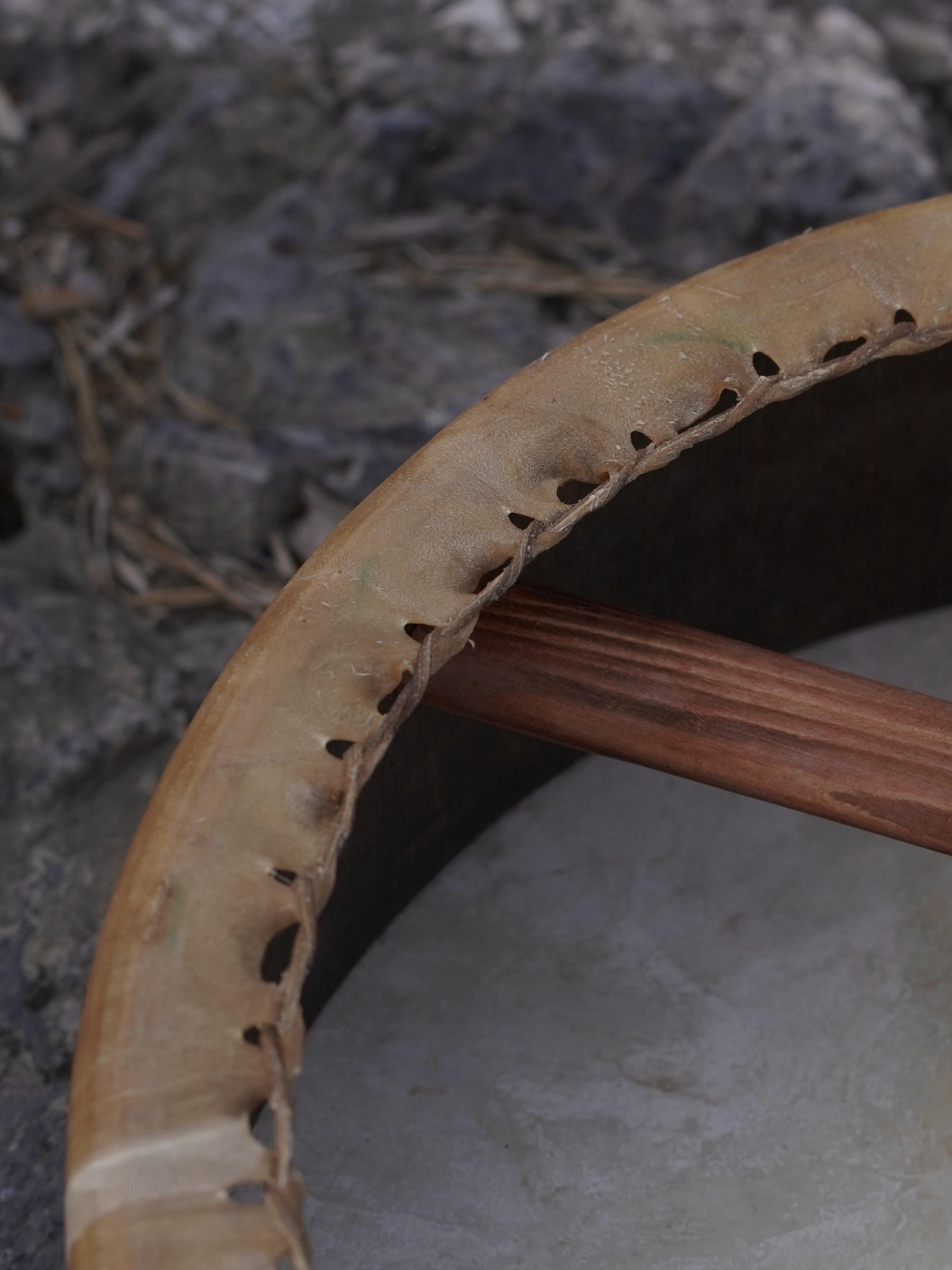
The frame, 14 centimetres deep, is assembled by hand by a frame maker. This is a separate specialisation: working with the wood, joining the pieces and achieving a precise circle.
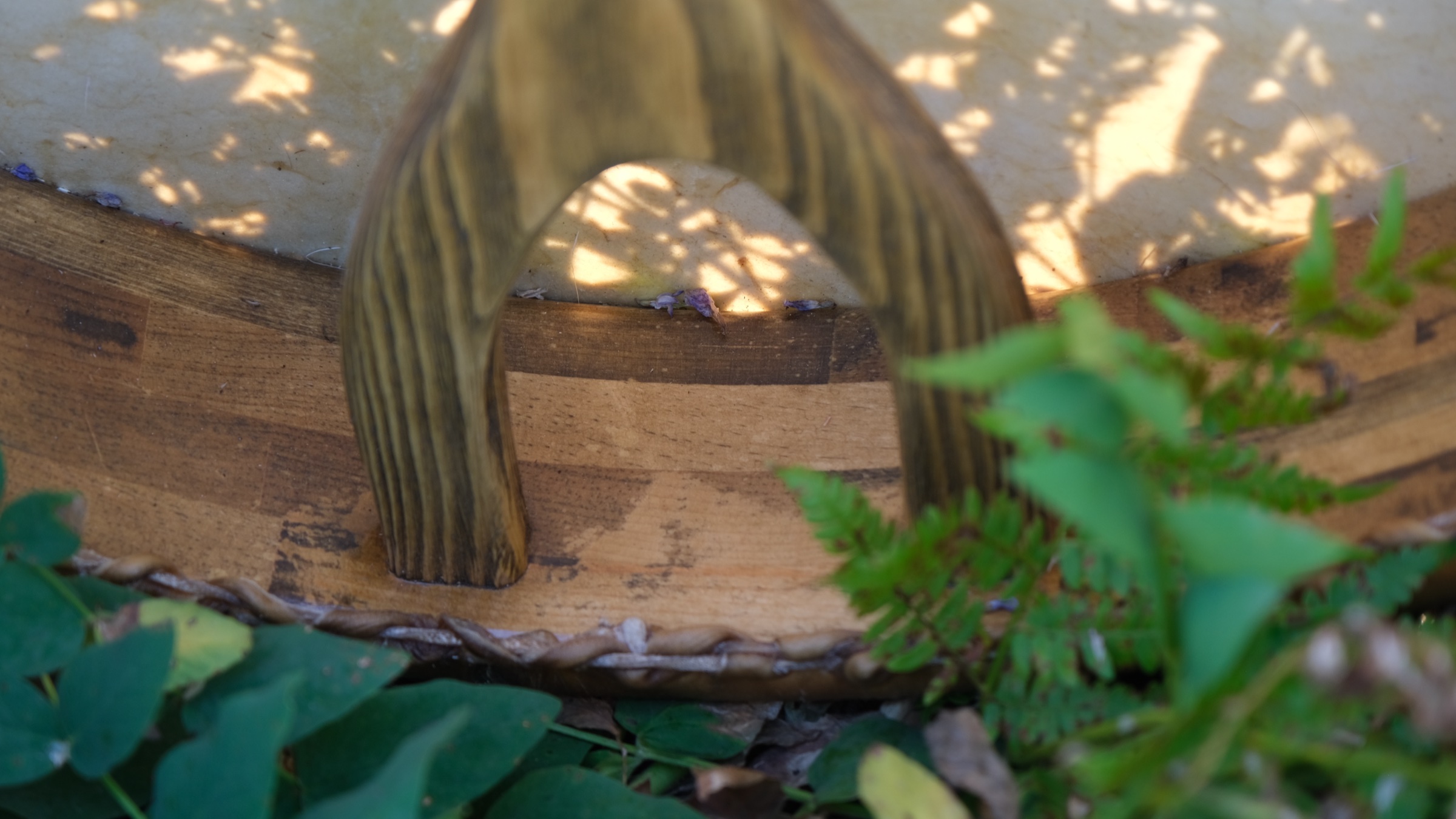
The cedar pieces are glued together with staggered joints. Adjacent pieces support one another, forming the drum’s wooden foundation. This construction allows us to use cedar and achieve a strong frame.
A circular shape matters for strength. The stretched hide places a load on the frame; as it dries, that force increases. A true circle helps distribute the load evenly. In the workshop’s experience, departures from a circular shape make the frame more vulnerable to breaking.
When it becomes very dry, hide can break a weak or irregularly shaped frame. Precision of shape and joints is therefore part of making an instrument intended for a long life.
Maral-hide membrane
For the membrane, we use maral hide from Altai farms where the animals graze freely. The maker prepares the hide by hand as rawhide and stretches it over the frame after preparation.
This is the traditional way of preparing the hide. The drum needs a living, untanned membrane that responds to moisture and warmth. It requires more care, but is easier to tune and tension through natural drying.
The traditional shamanic way of tuning is gentle drying in the warmth of a fire. As the hide releases moisture, its tension increases and the pitch rises. Working with the natural membrane becomes part of working with the instrument.
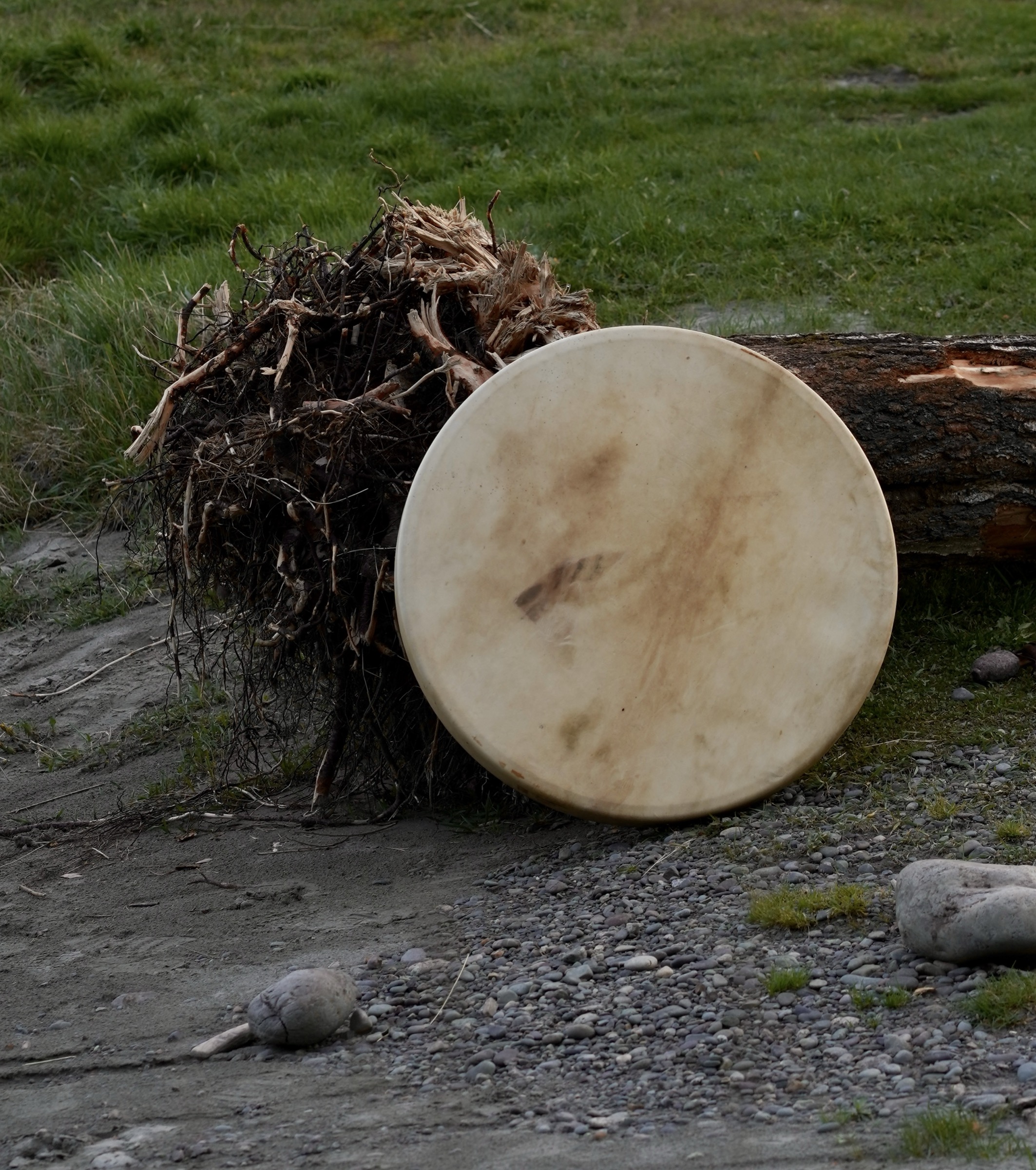
Hide preparation and tension are part of the work on the sound. The membrane must work together with the wooden frame. Its condition affects the drum’s voice and the load on the frame — which is why these parts are considered together during making and subsequent care.
The hide’s shades and texture are preserved. Every drum has its own natural surface, visible on the unpainted membrane.
Handle
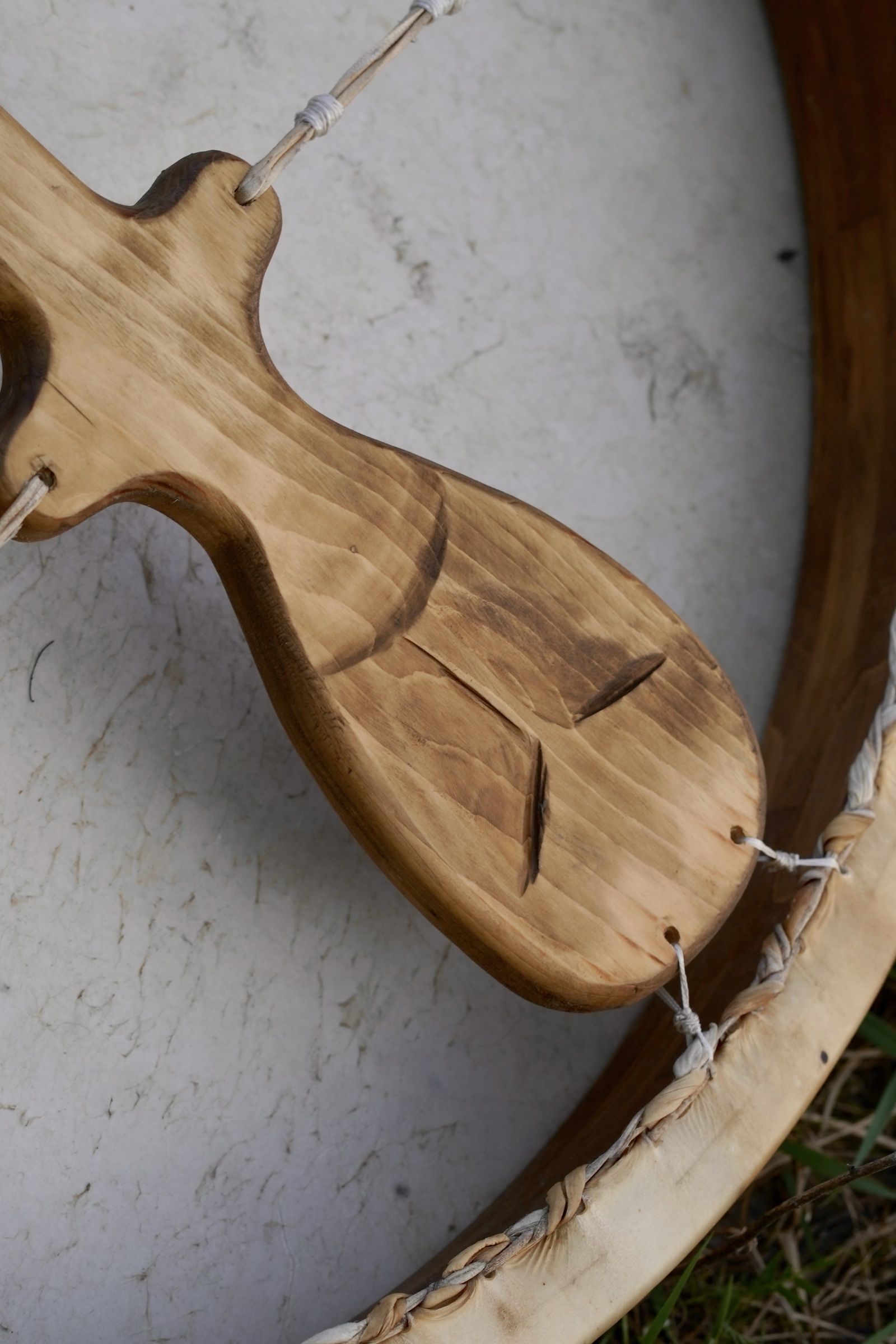
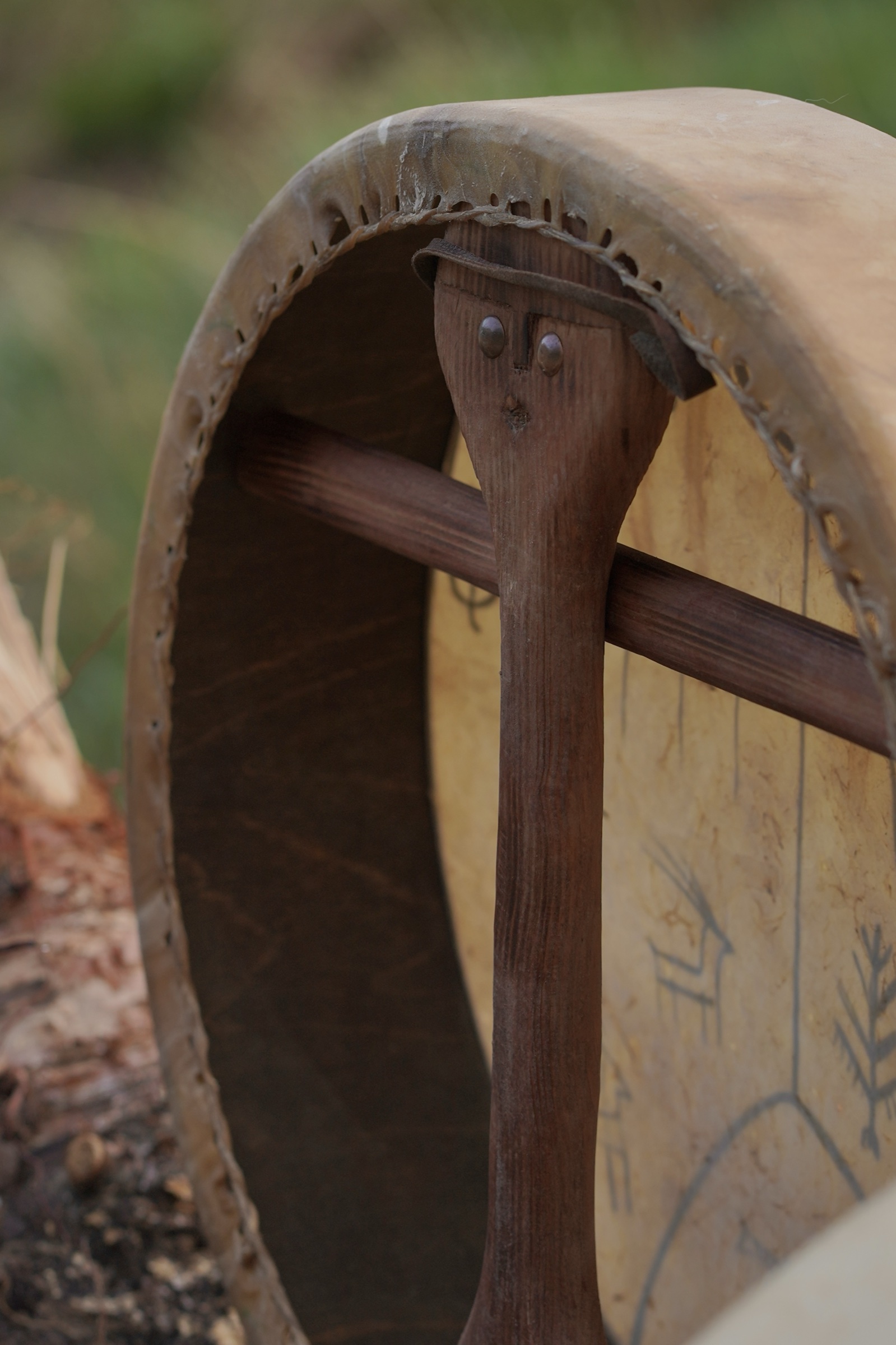
The handle is used to hold the drum while playing. In traditional Altai instruments, it was carved as a human figure, with a face and legs. This image was associated with the drum’s spirit-master, a shamanic guardian and continuity between generations.
The handle combined a practical purpose with symbolic meaning. Its shape is another detail through which the instrument’s traditional construction is revealed.
An unpainted membrane
In the Altai tradition on which we draw, a maker created the drum for the shaman. On receiving the instrument, the shaman added paintings and personal objects. Making the drum provided the foundation for its subsequent personal appearance.
We hand over the drum with an unpainted membrane, continuing this principle. Its further appearance is determined by its owner. You can preserve the natural surface or, over time, add what holds meaning for you.
Making and resting
The frame, hide preparation, assembly and leather case are the work of makers specialising in those crafts. Each concentrates on their part; the ALTAU workshop is responsible for the whole instrument and complete set.
Checks accompany the making. Before stretching the hide, the maker receives and inspects the frame; prepared parts and fastenings are checked during assembly. Observations are discussed among those involved, and the experience gained is taken into account in subsequent instruments.
After stretching, the drum is hung to dry, then given time to rest. The instrument is observed and its membrane cared for. After transport, the drum also needs time in its new surroundings. We carry out a final inspection before packing and dispatch.
We gather materials seasonally and use them throughout the year. Our principal drum can be commissioned at any time of year; the timeframe is agreed around the makers’ work.
How the workshop works →- 01Gathering materials in autumn and winter
- 02Making and inspecting the frames
- 03Preparing and stretching the membraneIn parallel: beaters
- 04Drying
- 05Inspection, resting, observation and care
- 06Transport and time in new surroundings
- 07Final inspection before packing and dispatch
For a lifetime
In the Altai tradition, the drum’s life was connected with its owner’s life. The wooden frame was retained, and a damaged membrane replaced when needed. The frame itself remained the instrument’s foundation.
We create a drum with a lifetime in mind. The strength of the wooden frame, work with the hide and the possibility of ongoing care therefore matter from the very beginning of making.
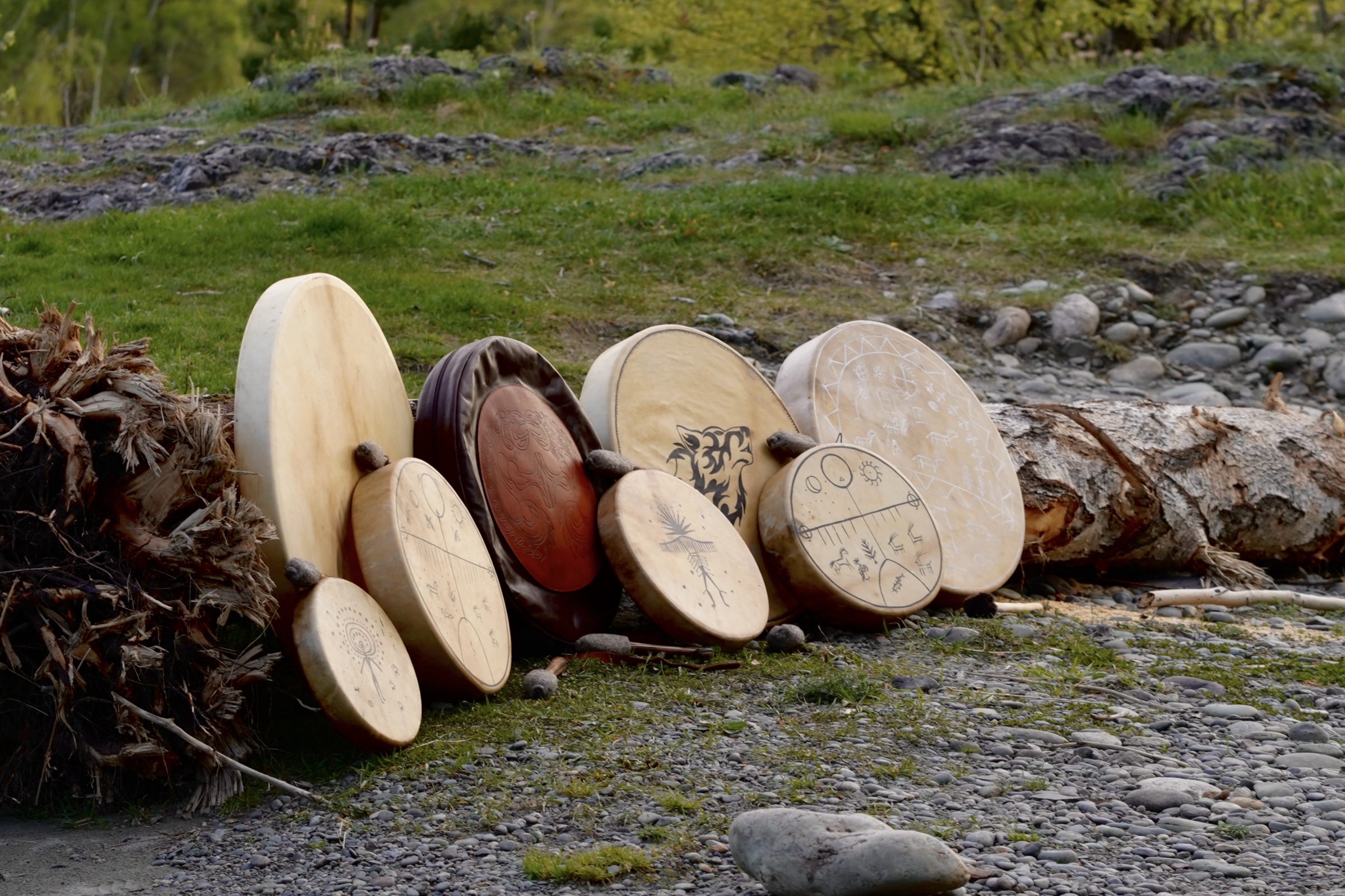
Today, a drum lives at home, travels and changes climate. In winter, heating dries the air in a flat; in more humid surroundings, the membrane absorbs moisture. Changes in its tension affect both the sound and the load on the frame.
Experience of sending, using and repairing drums helps us take these conditions into account. Traditional construction continues in an instrument prepared for modern life. The workshop stays in touch with owners about care and the drum’s condition.
The complete set
With the drum, you receive a handmade leather case, three beaters and an instrument passport.
The case is made by a leather workshop for storing and travelling with the drum. Three beaters allow the sound’s character to change with the way you play. The passport accompanies the instrument and preserves its connection with the workshop.
Price and purchase
A 60 cm drum, a handmade leather case, three beaters and a passport.
The price includes 21% VAT. The final VAT amount is calculated according to the delivery country. Delivery costs are calculated separately before payment. You can buy a ready-made drum or an instrument made after payment. Availability, the time until receipt and delivery to your country are agreed with you personally.
New drums from the workshop
Leave your email — we will let you know when drums become available, including rare large sizes.